Cabinet hinges.
Concealed cup hinges for kitchen, wardrobe and bathroom doors: soft-close in three damper designs, push-open hinges for handle-less fronts, special angles from −45° to 165°, aluminium-frame and SUS304 stainless versions. Every model adjusts in three directions and ships in full overlay, half overlay and inset.
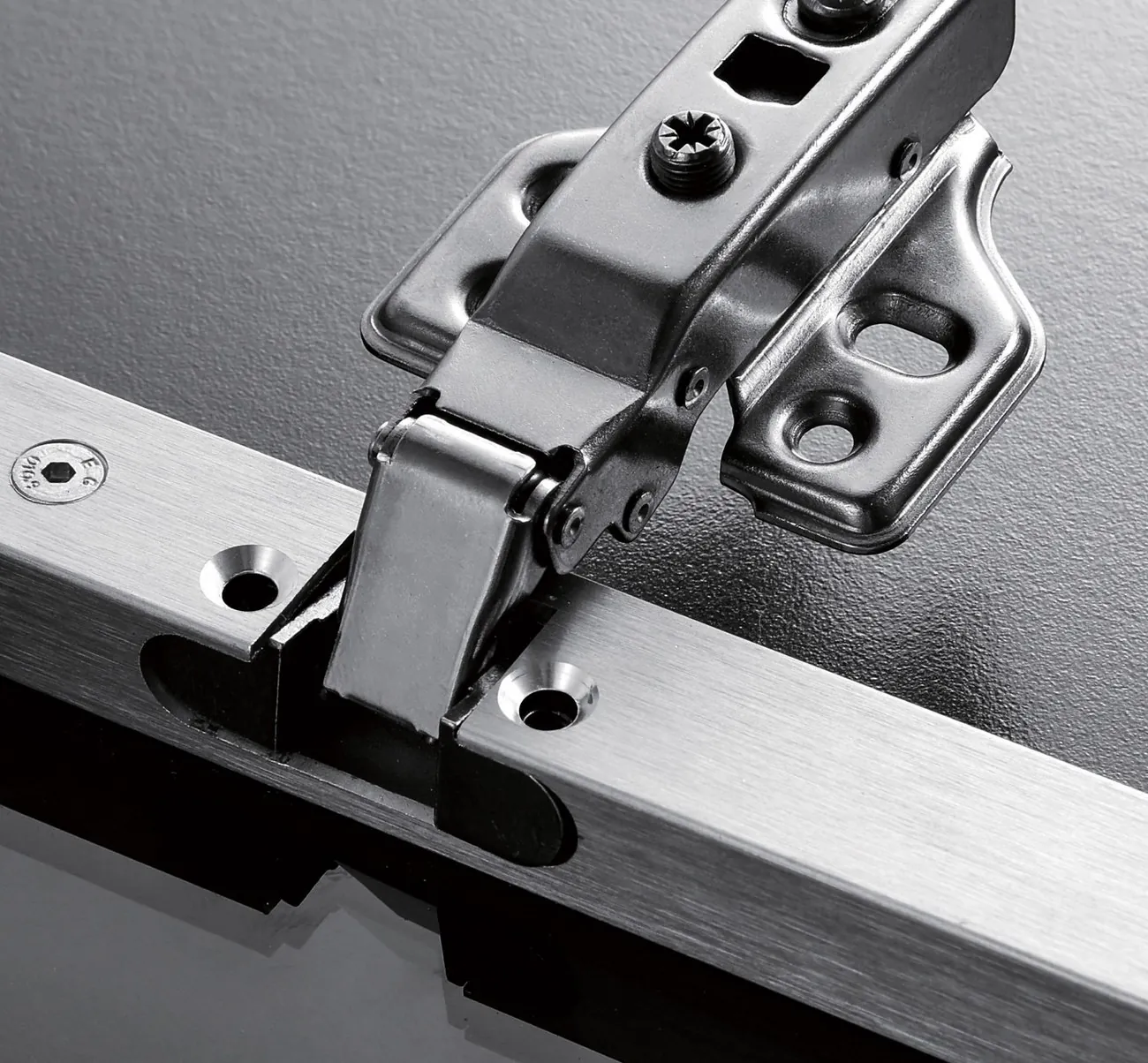
7 types. Pick by the job.
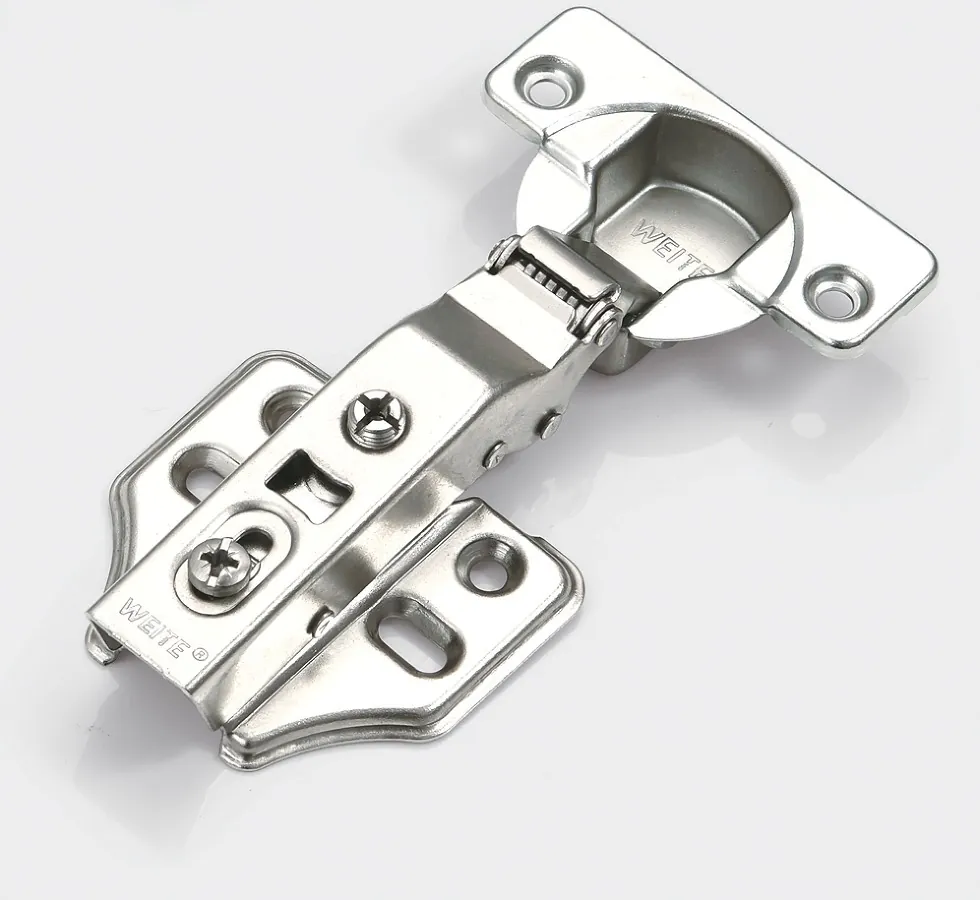
Soft-close cup hinges
Ø35 mm cup hinges with a damper in the cup, an external damper or a hydraulic arm. 2-, 3- and 4-stage springs, fixed or clip-on mounting.
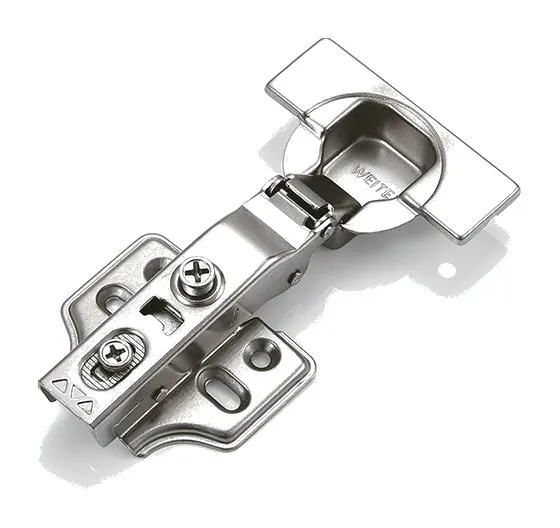
Push-open hinges for handle-less doors
Spring-free and push-open hinges that work with a push latch or opener so the door needs no handle.
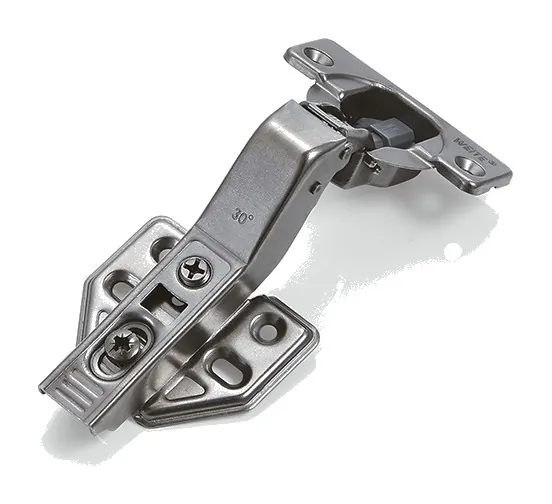
Special-angle hinges
+30°, +45°, −30°, −45° corner hinges, a 90° hinge, a 165° wide-angle hinge and a 125° hinge for 36 mm doors.
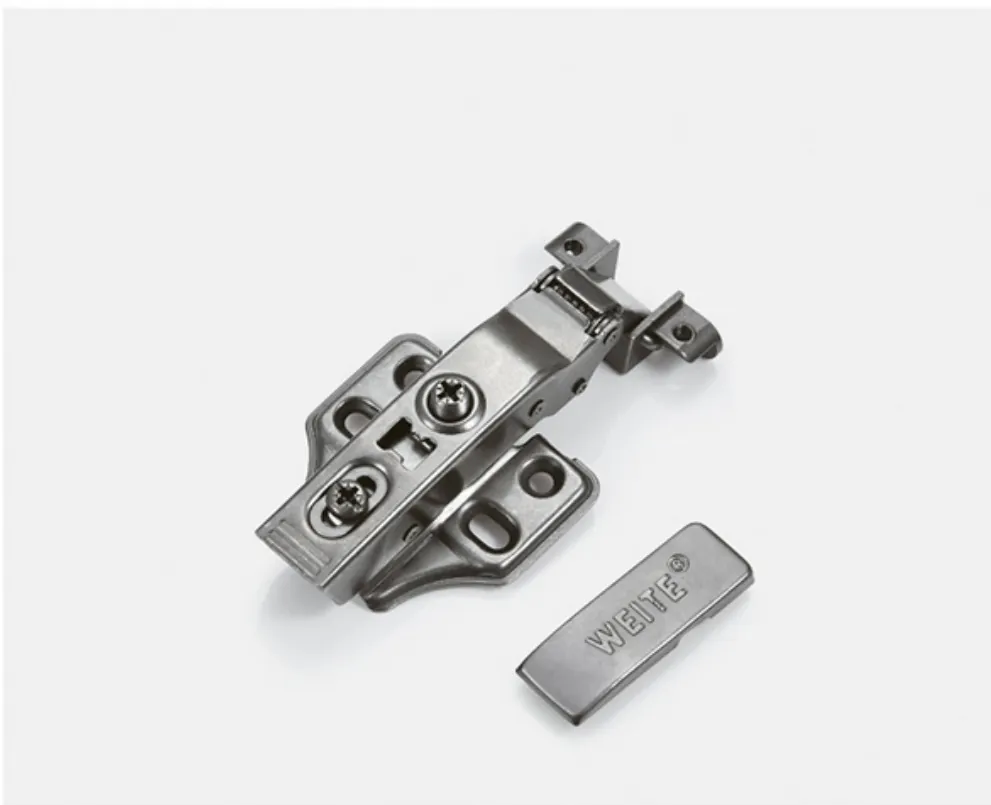
Aluminium-frame door hinges
Round-head hinges with 28 mm or 38 mm drilling for 16–25 mm aluminium profile doors, gunmetal.
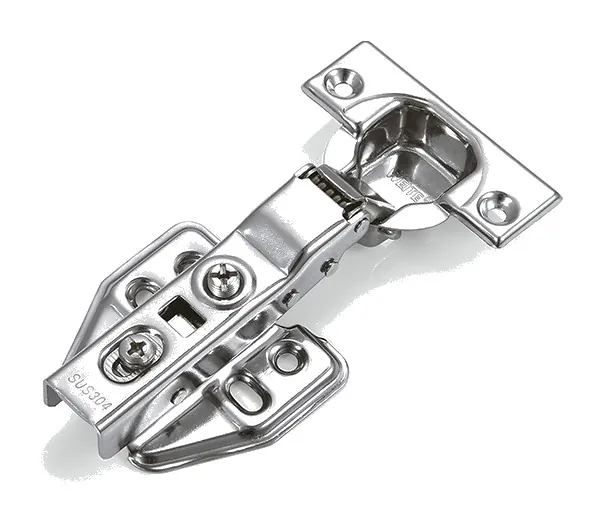
Stainless steel hinges
SUS304 stainless, bright finish, no plating to wear off. For bathrooms and washable cabinets.
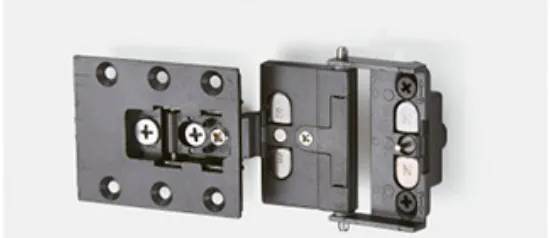
Specialty hinges
Inward-opening, flap, pin and pivot hinges for doors a cup hinge cannot handle.
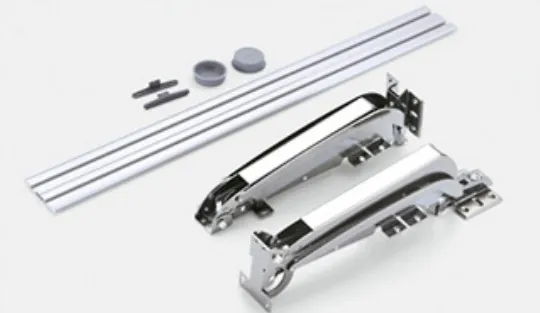
Folding door fittings
Bi-fold pocket door hinge set for doors 300–550 mm wide.
Test figures from WEITE's own testing centre. Reports available with samples. About the factory ›
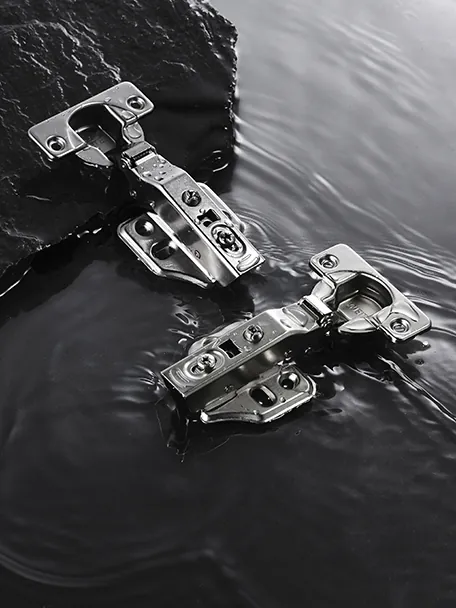
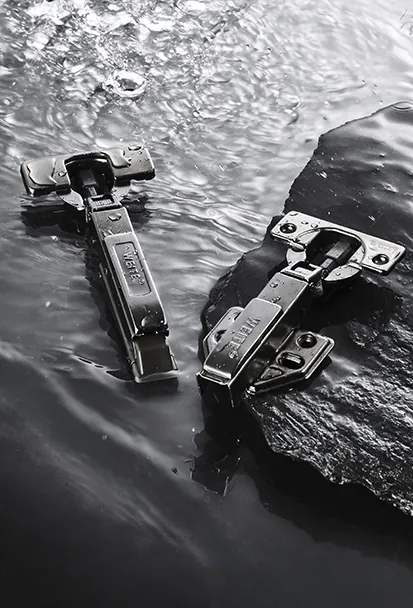
All 27 models.
Order number = model + variant suffix; every order number from the price list is listed on the model page.
Soft-close cup hinges · 7 models
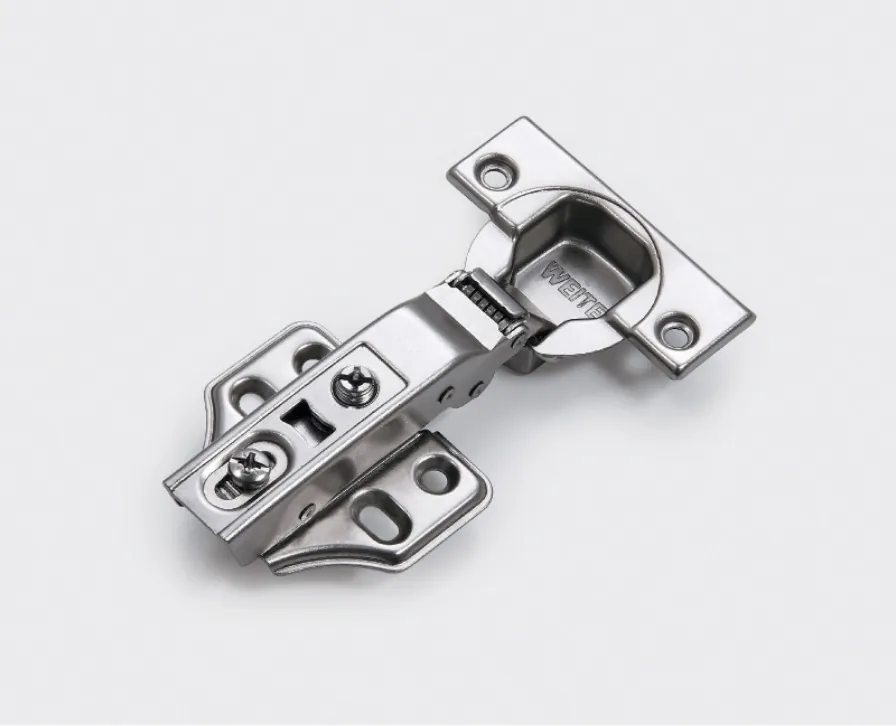
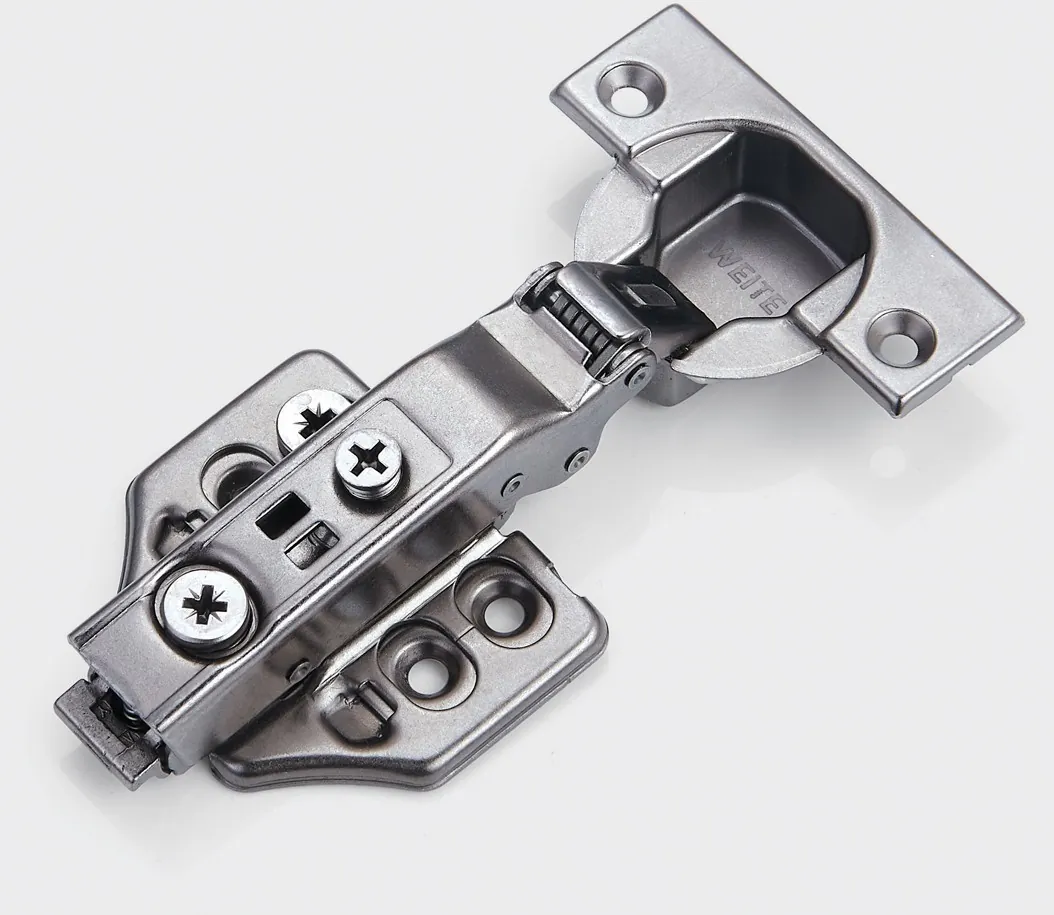
Ø35 mm cup hinges with a damper in the cup, an external damper or a hydraulic arm. 2-, 3- and 4-stage springs, fixed or clip-on mounting.
- 105° opening
- 16–28 mm doors
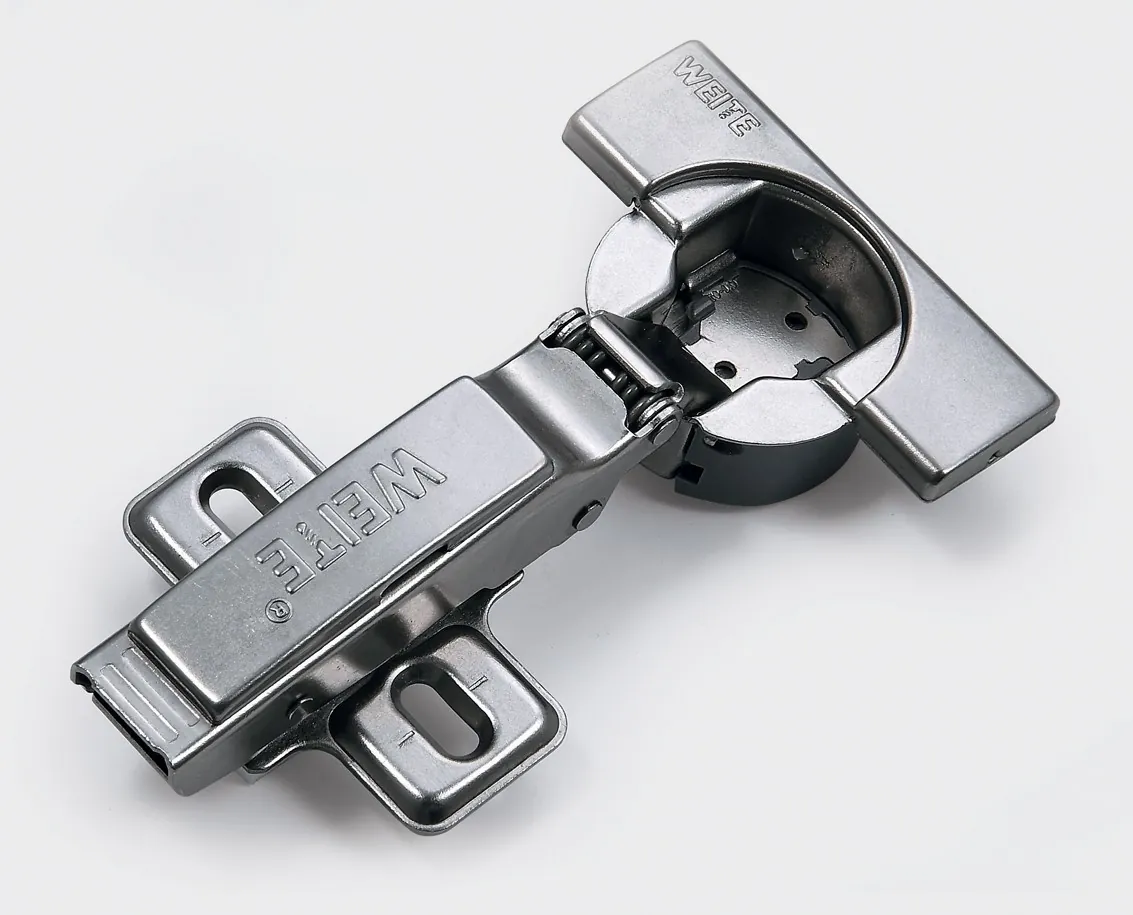
- Clip-on, tool-free
- 16–25 mm doors
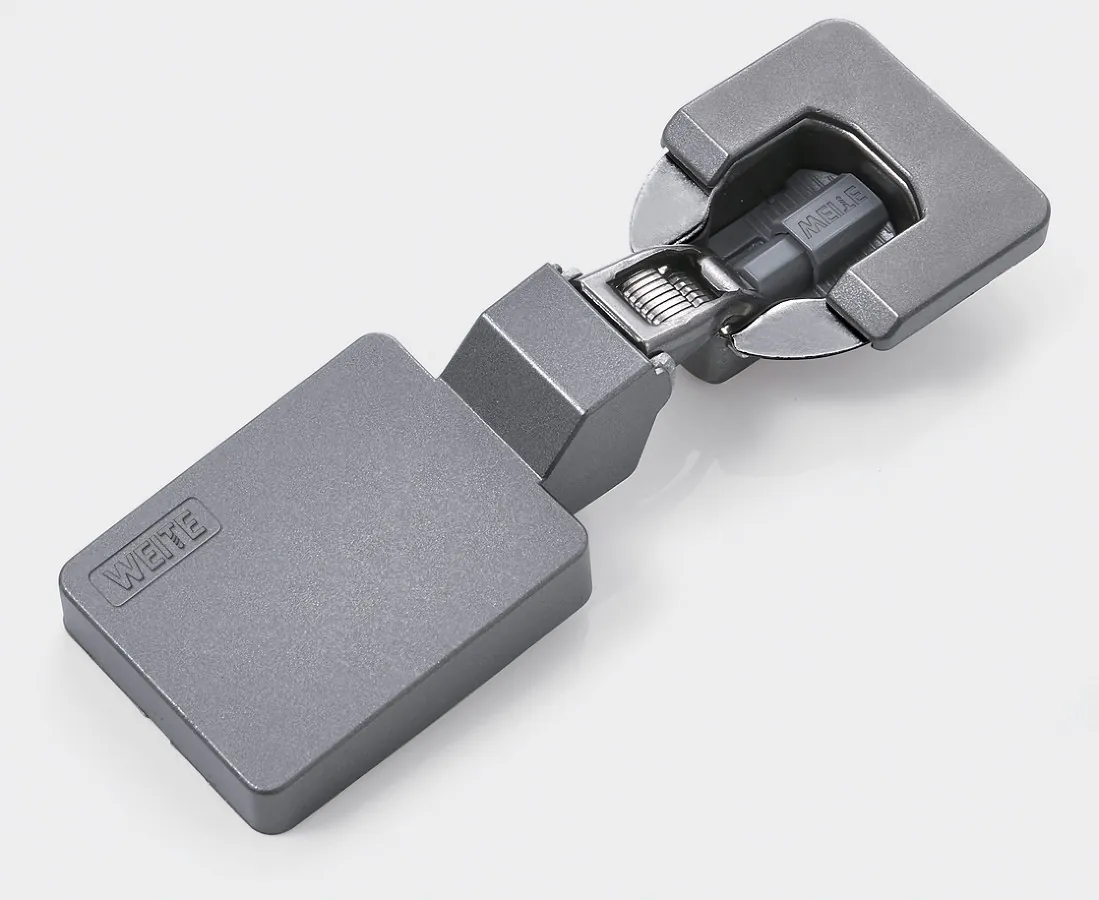
- 105° opening
- 16–28 mm doors
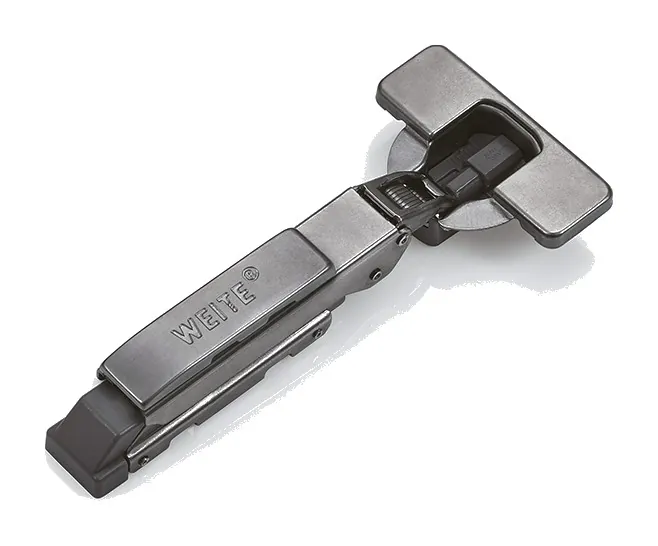
- 105° opening
- 16–28 mm doors
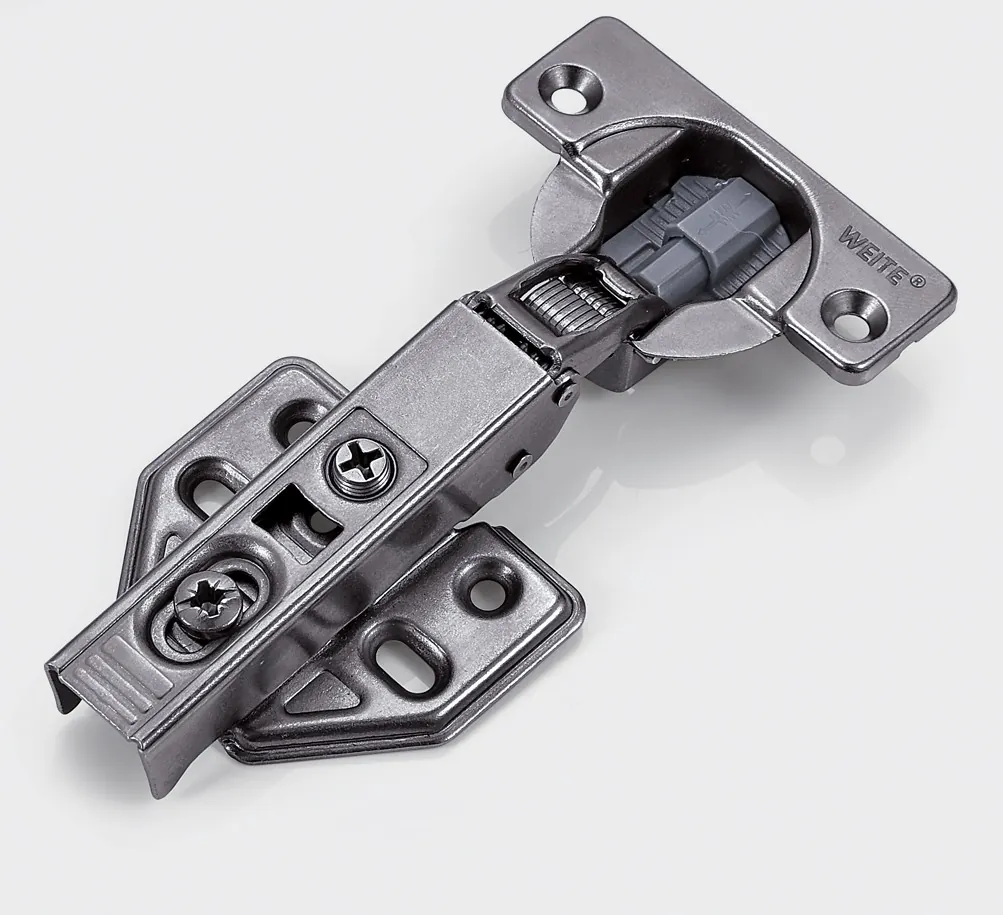
- 105° opening
- 16–28 mm doors
- 105° opening
- 16–22 mm doors
- Clip-on
- 3-stage
Push-open hinges for handle-less doors · 2 models
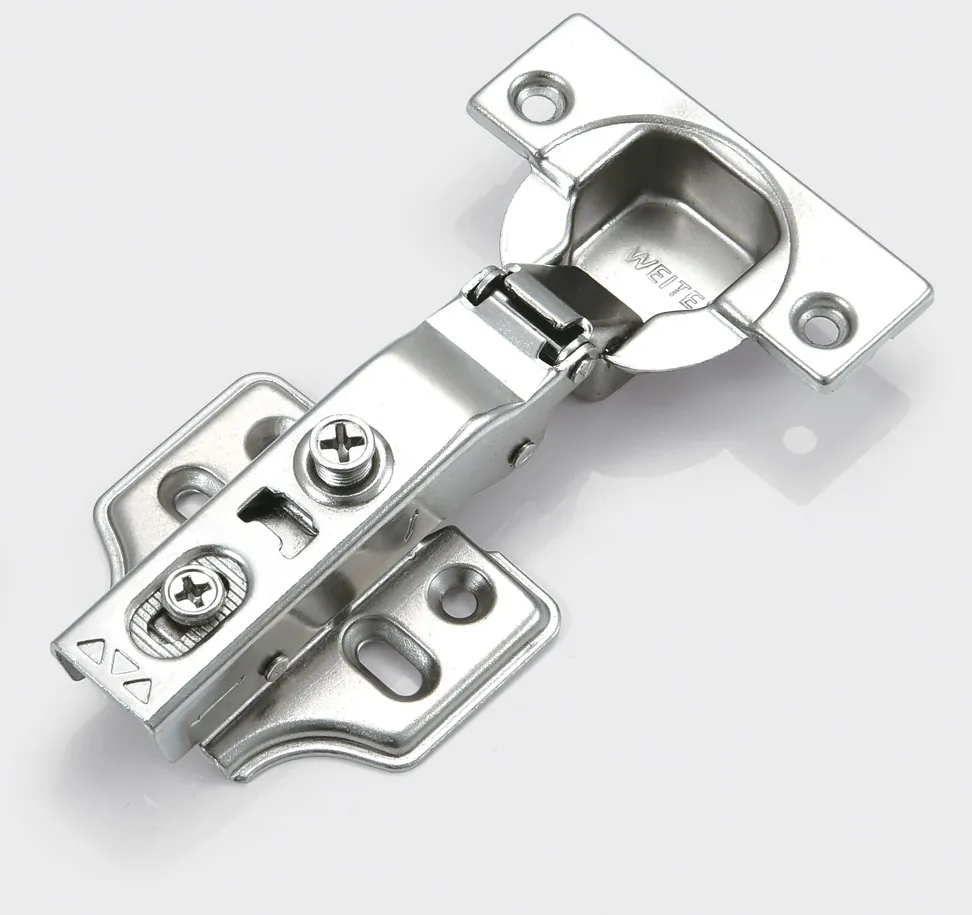
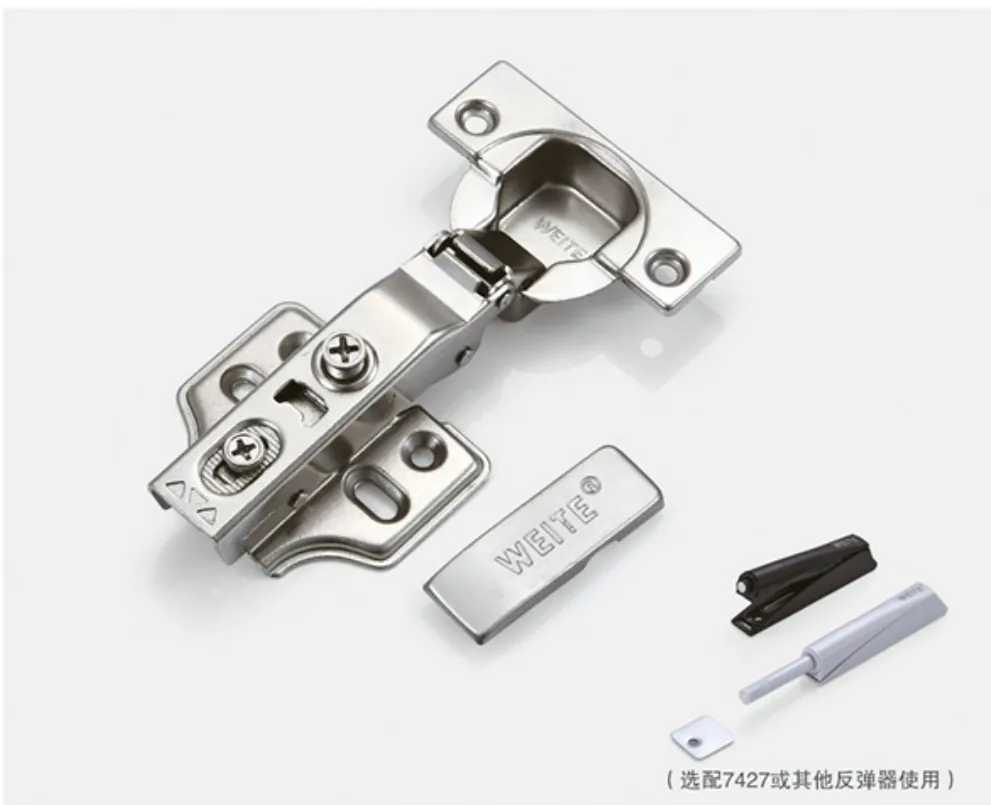
Spring-free and push-open hinges that work with a push latch or opener so the door needs no handle.
Special-angle hinges · 7 models
+30°, +45°, −30°, −45° corner hinges, a 90° hinge, a 165° wide-angle hinge and a 125° hinge for 36 mm doors.
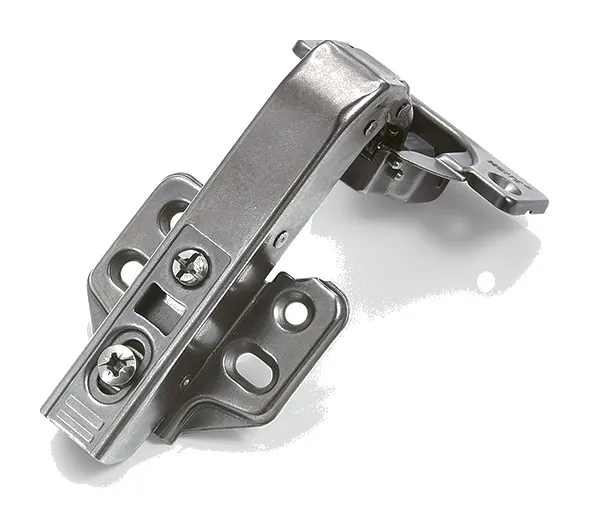
- 90° opening
- 16–28 mm doors
- +30° door angle
- 95° opening
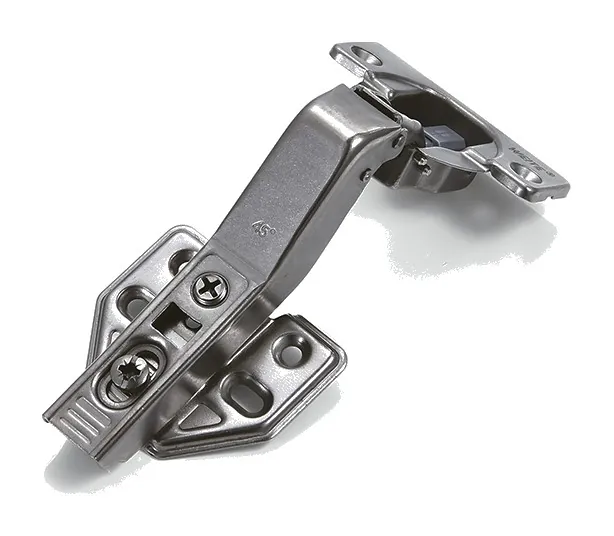
- +45° door angle
- 95° opening
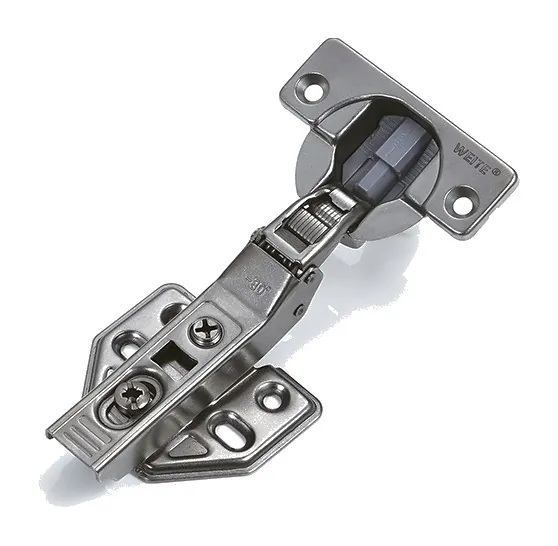
- −30° door angle
- 95° opening
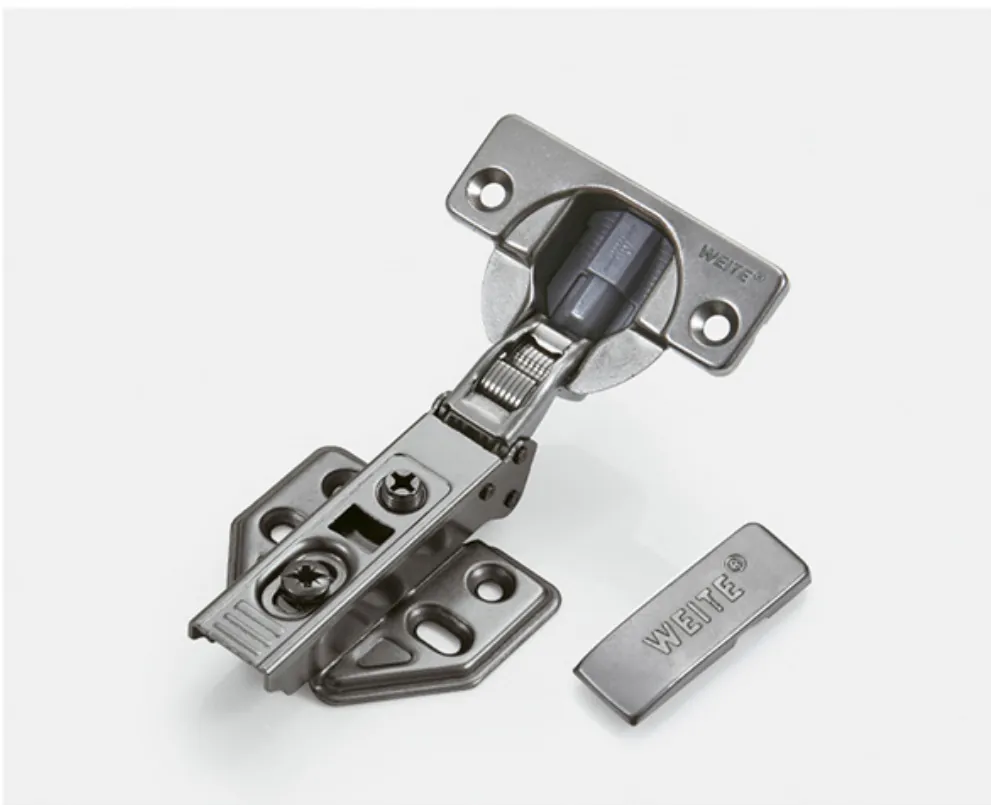
- −45° door angle
- 95° opening
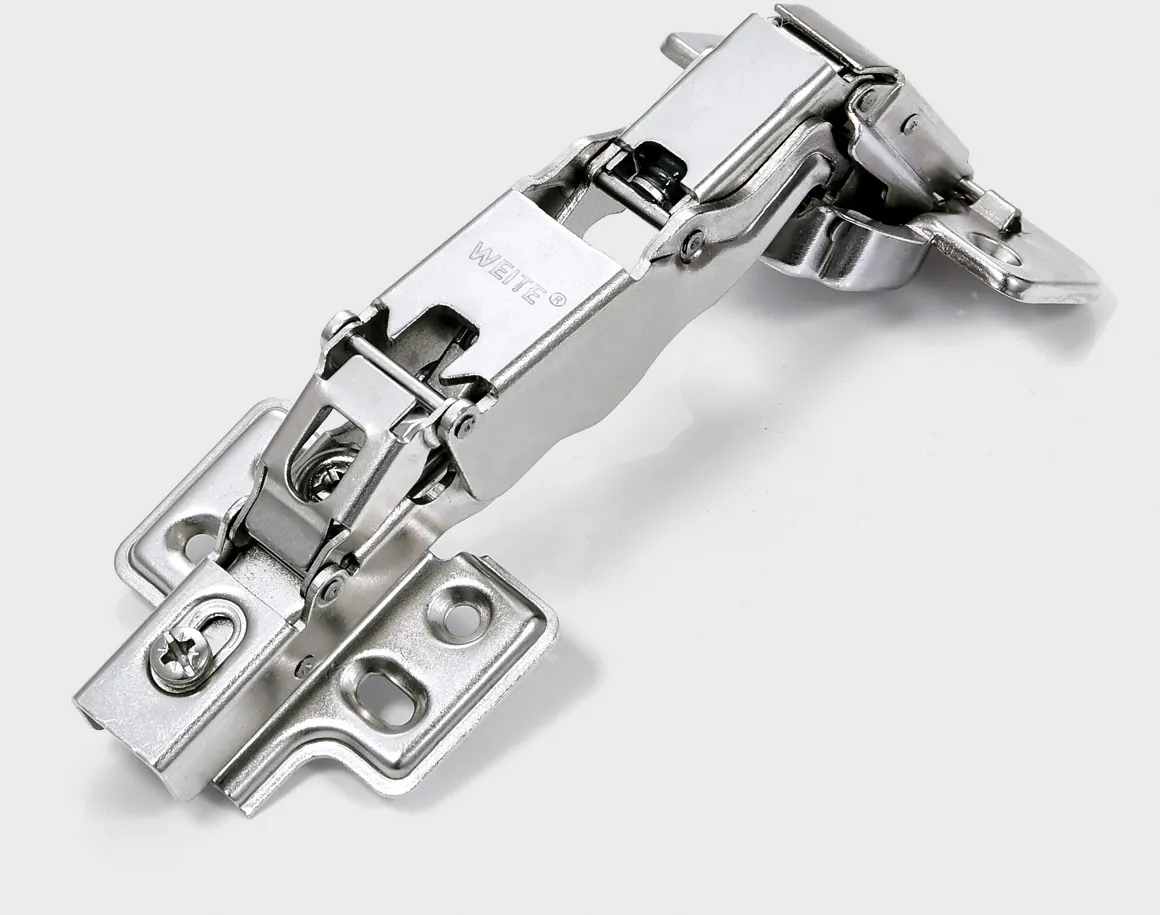
- 165° opening
- 15–25 mm doors
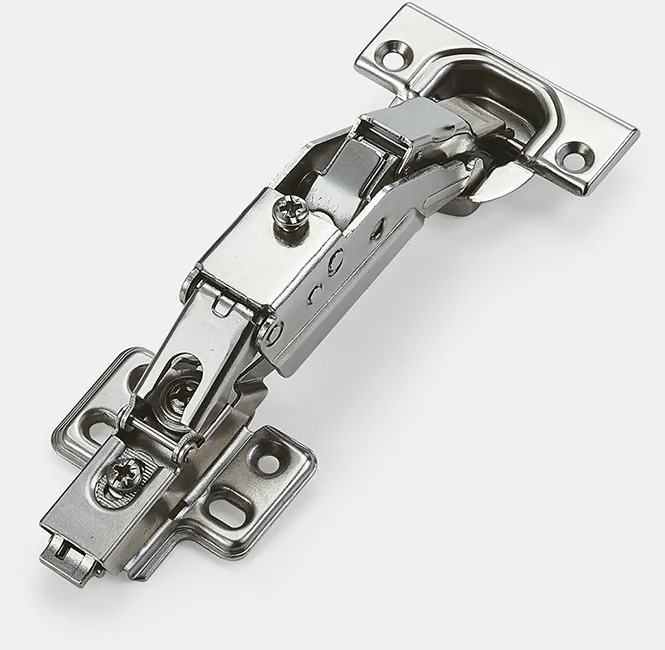
- 125° opening
- 16–36 mm doors
Aluminium-frame door hinges · 5 models
Round-head hinges with 28 mm or 38 mm drilling for 16–25 mm aluminium profile doors, gunmetal.
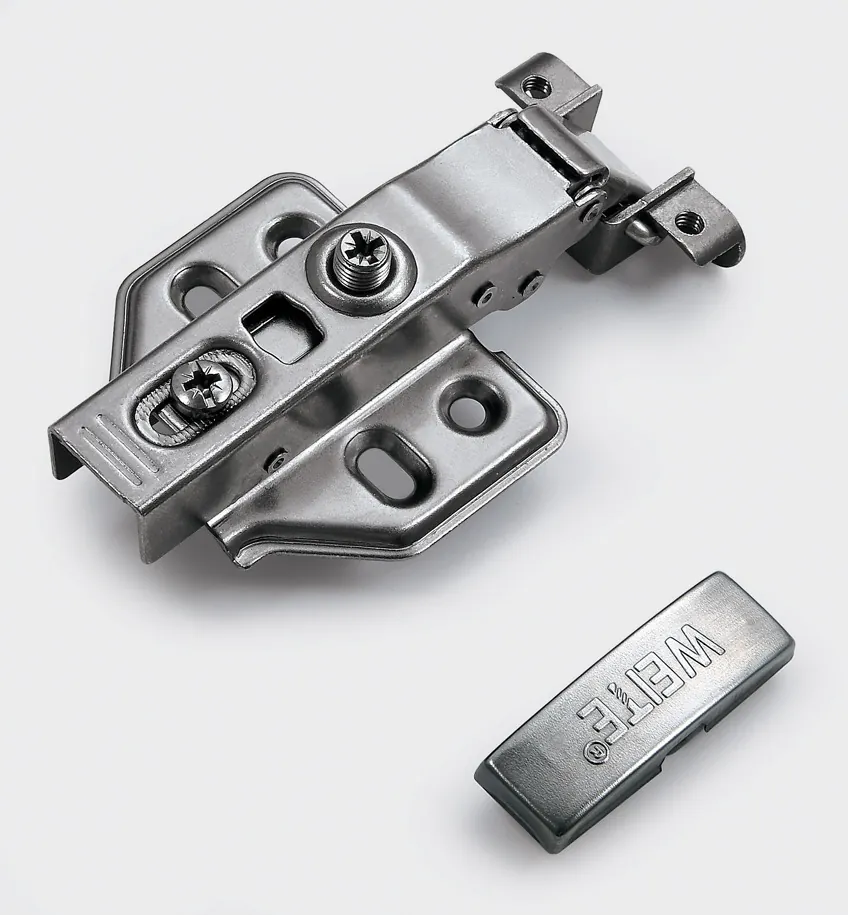
- For 16–20 mm aluminium frames
- 105° opening
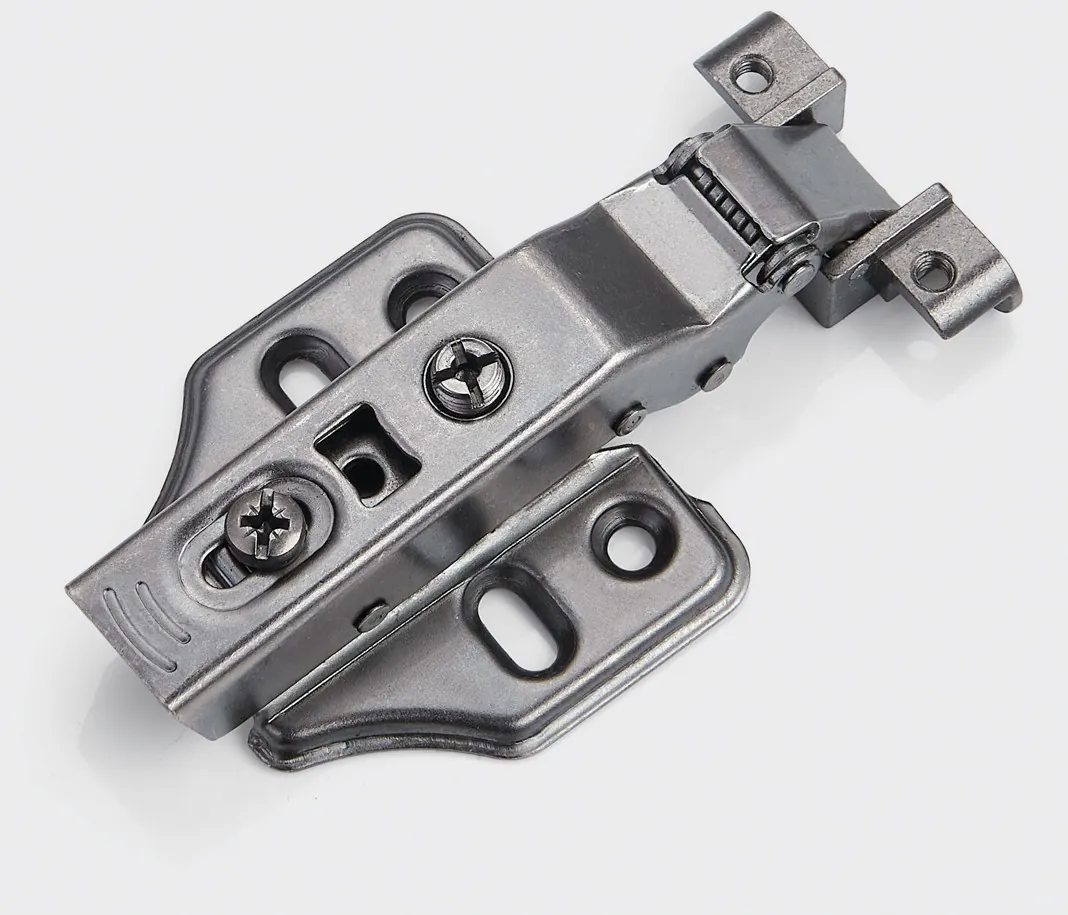
- For 16–25 mm aluminium frames
- 105° opening
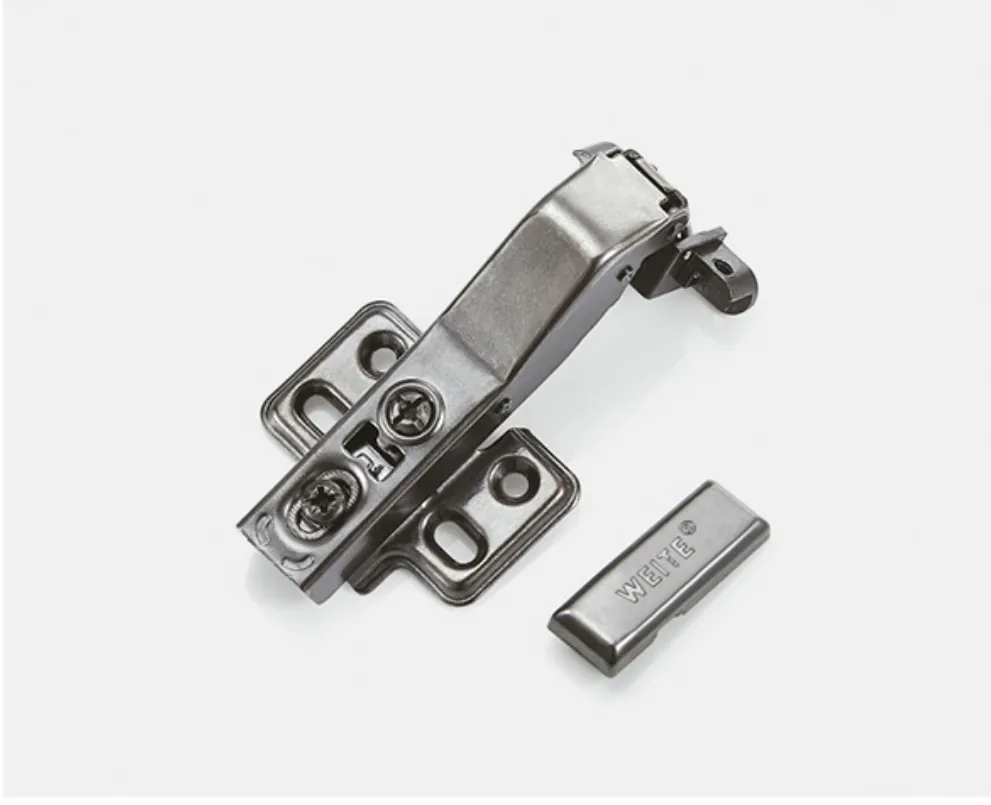
- +45° door angle
- 95° opening
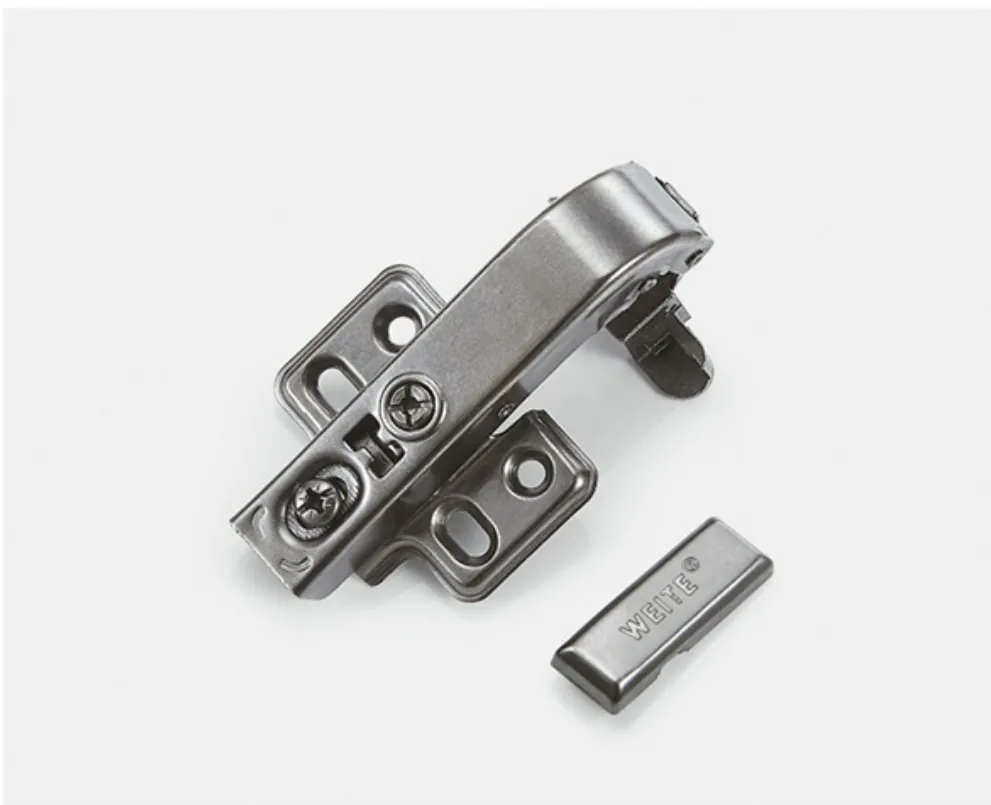
- 90° opening
- 18–25 mm frames
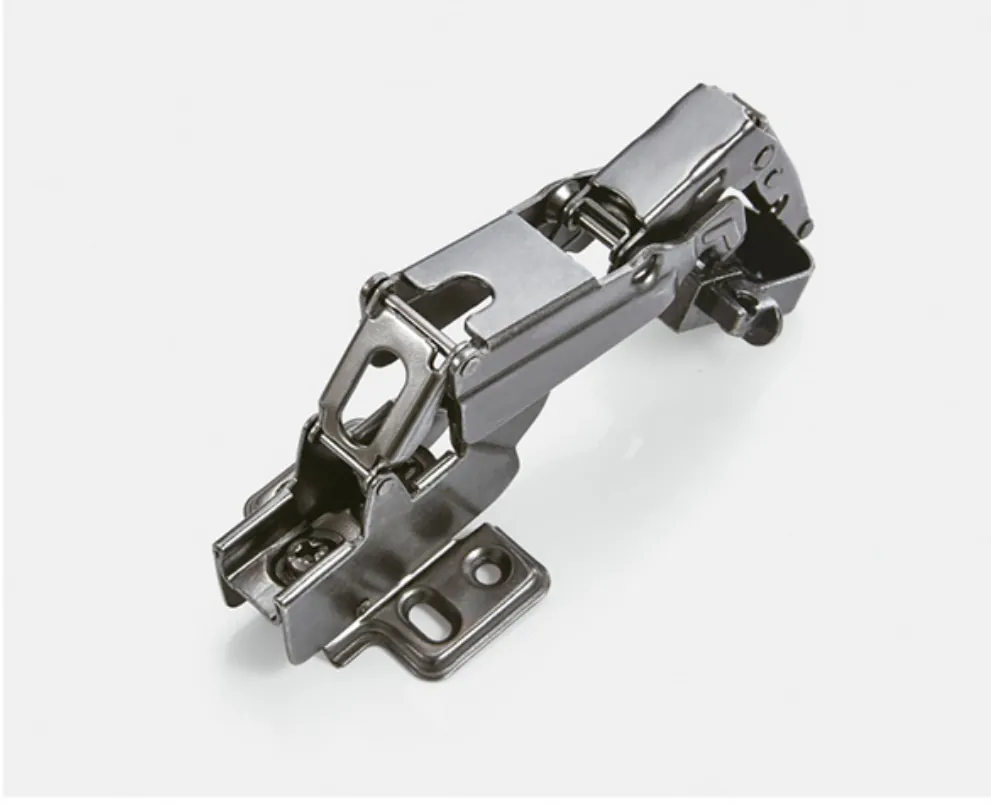
- 165° opening
- 22–25 mm frames
Stainless steel hinges · 1 models
SUS304 stainless, bright finish, no plating to wear off. For bathrooms and washable cabinets.
Specialty hinges · 4 models
Inward-opening, flap, pin and pivot hinges for doors a cup hinge cannot handle.
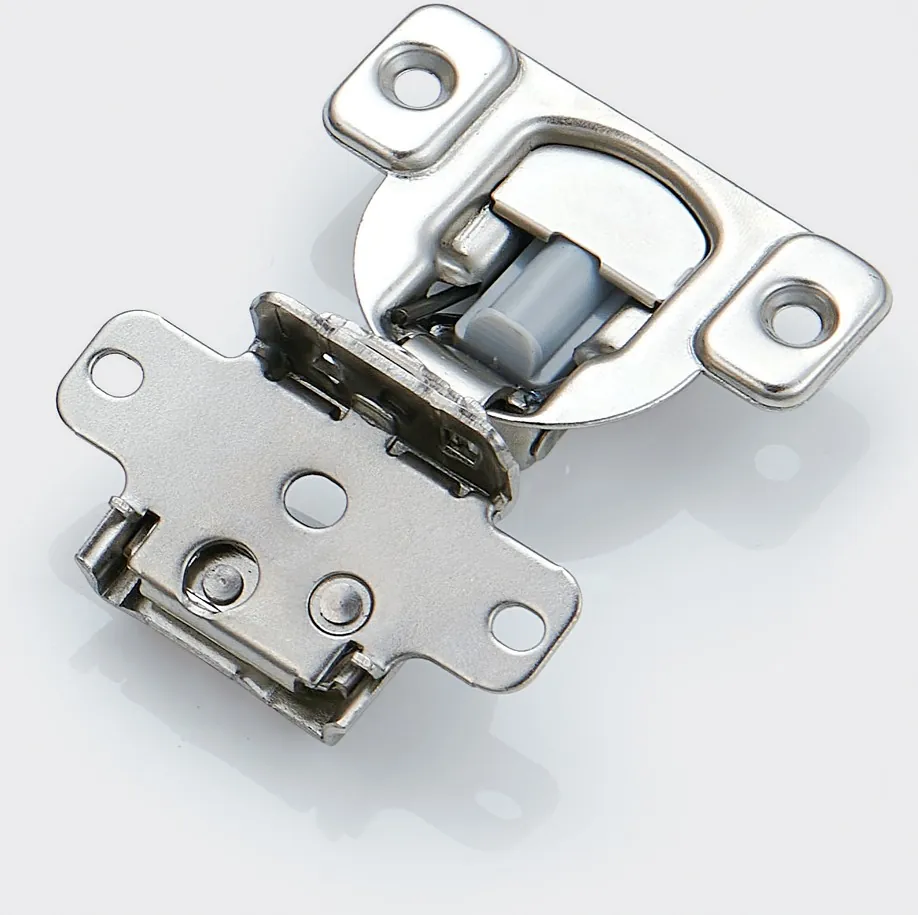
- Inward-opening doors
- 16–22 mm doors
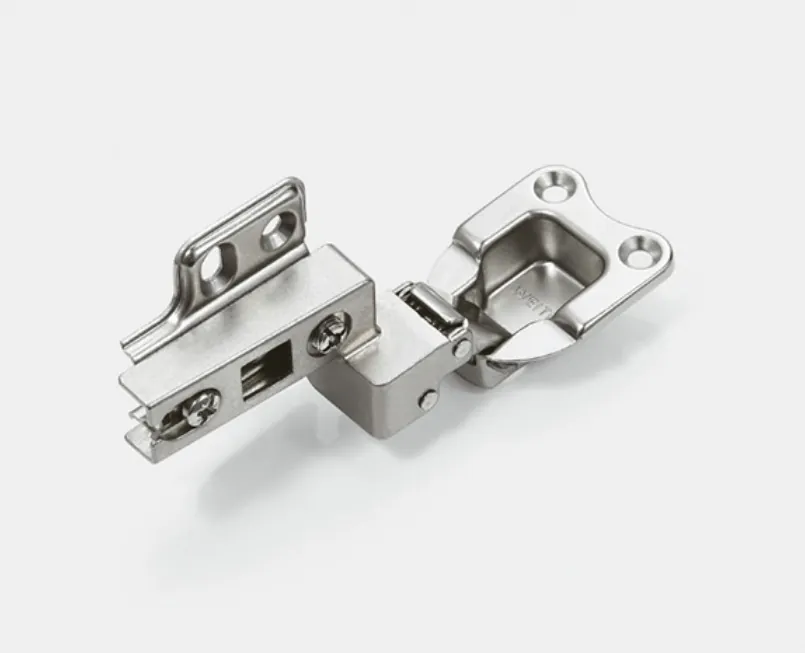
- Flap doors, up or down
- 14–26 mm doors
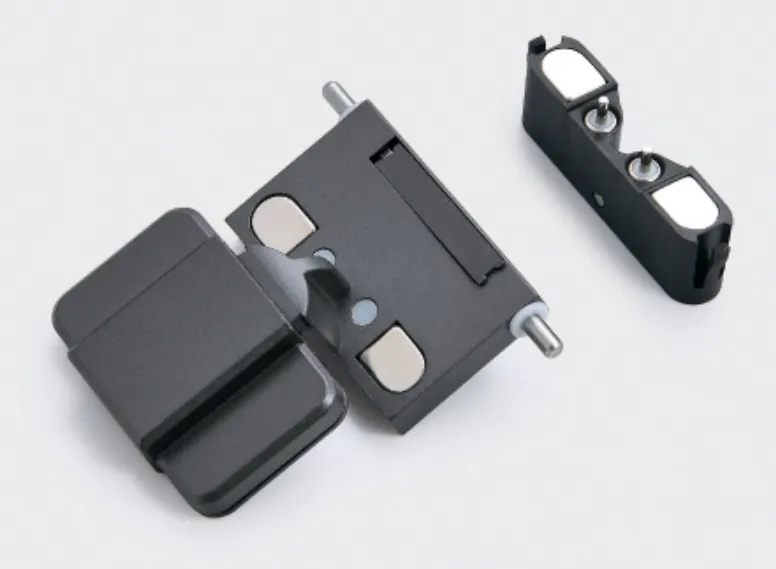
- 180° or 270° opening
- 30 kg per pair
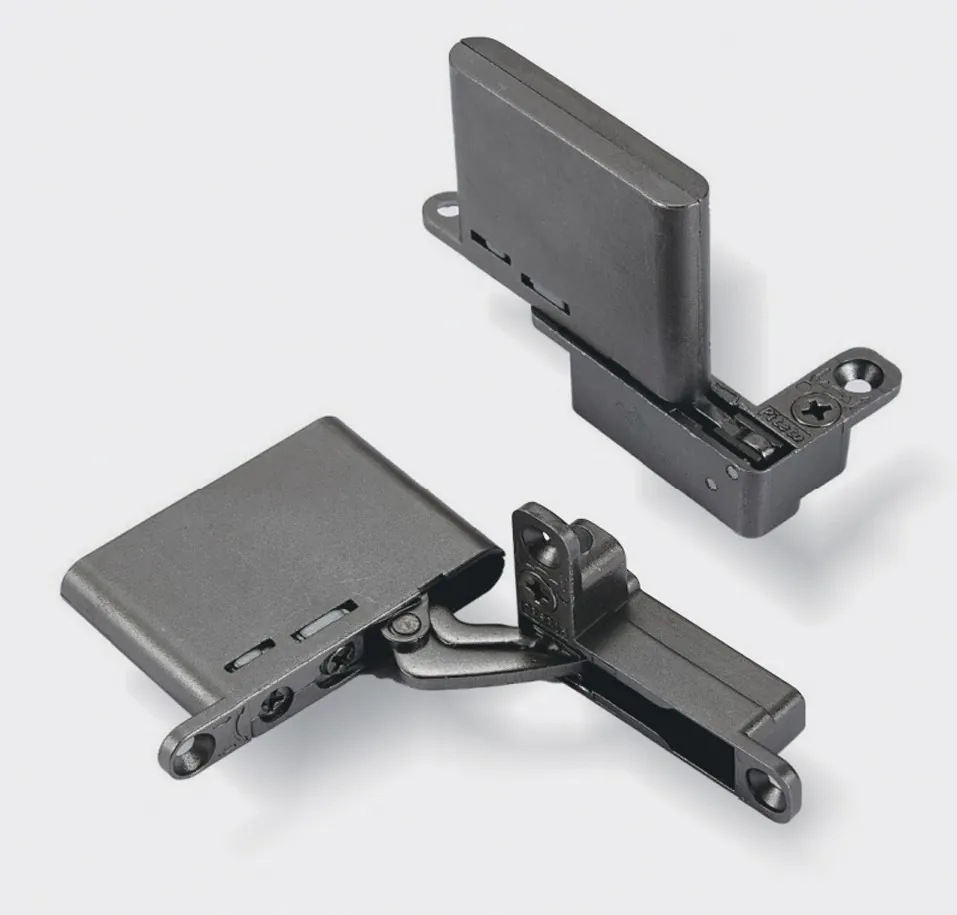
- Top and bottom pivot
- 25 kg per pair
Folding door fittings · 1 models
Bi-fold pocket door hinge set for doors 300–550 mm wide.
How to adjust cabinet hinges: sideways, depth and height ›
Push-to-open cabinet door not working? Causes and fixes ›
Private-label furniture hardware: how OEM branding works ›
How to choose a concealed cabinet hinge.
A concealed hinge, also called a cup hinge or European hinge, sits inside a round cup drilled into the back of the door and a mounting plate screwed to the cabinet side. Nothing shows when the door is closed. Almost every hinge on this page follows that pattern; the differences are in five choices, and this guide walks through them in the order a cabinet maker normally makes them.
1. Overlay: how the door sits on the cabinet
The arm shape decides where the door ends up relative to the side panel. A full overlay hinge (straight arm, order suffix 0309) covers the whole side panel, which is the standard for frameless kitchens. A half overlay hinge (half-crank arm, 0308) covers half the panel so two doors can share one partition. An inset hinge (full-crank arm, 0307) puts the door inside the carcass, flush with the panel edge. Nearly every WEITE cup hinge ships in all three, so you choose the model first and the overlay second.
Other catalogues name the same three by arm shape (straight arm, half crank, full crank) or call them full cover, half cover and inset. All three are for frameless cabinets. North American face-frame cabinets are specified differently, by how far the door overlaps the frame in inches (1/2 inch, 1-1/4 inch); for those, send the frame width and the overlap you need with your enquiry.
2. Opening angle
105° is the everyday angle: the door swings clear of drawers and pull-outs inside the cabinet. 90° hinges are for doors that must not swing into a wall or an adjacent door. 165° wide-angle hinges (6906, 7517) are for corner cabinets and for doors that have to fold fully out of the way of internal pull-outs. Corner hinges with a built-in angle, +30°, +45°, −30° or −45° (6924, 6926, 6925, 6927), mount on angled cabinets such as diagonal corner units and end panels.
For the widest opening, choose by the door. The 6906 opens 15 to 25 mm doors to 165°, and the 7517 does the same on 22 to 25 mm aluminium-frame doors. For 25 or 35 mm aluminium-frame glass doors, the 7452 pin hinge opens to 180° or 270°. A wider swing needs clear space beside the cabinet, so check what is next to the door before you choose.
3. Door thickness and material
Standard particleboard and MDF doors are 16 to 22 mm. Thicker painted or framed doors run to 28 mm, and the 6915 takes doors up to 36 mm. Check the door thickness range on the specification table; a hinge rated 16 to 28 mm fits both thin and thick doors without changing the model. Aluminium-frame doors are different: the profile is narrow, so they need a round-head hinge with a 28 mm or 38 mm drilling (7445, 7446, 7474, 7527, 7517) rather than a 35 mm cup. For bathrooms, outdoor kitchens and any cabinet that gets washed down, the SUS304 stainless steel 6919 has no plating to corrode.
4. Closing action and spring stages
Soft close means a damper slows the last few degrees so the door shuts silently. WEITE builds it three ways: a damper inside the cup (6914, 6931), a detachable damper on the arm (6921, 6923 to 6927) and a hydraulic damper in the arm itself (6913, 6916). The spring stages describe how the door behaves when you let go. A 2-stage hinge holds open or closes. A 3-stage hinge adds a free-swing zone in the middle, so a door left half open stays there. For handle-less fronts, use either the push-open 7551, which springs the door open when pressed and still closes softly, or the spring-free 6920 with a push latch.
5. Mounting and adjustment
Fixed mount hinges screw the arm to the plate; they are the economical choice for production runs where doors are fitted once. Clip-on hinges (6931, 6928, 6915) snap onto the plate without tools, so doors can be removed for painting, transport or service. Every WEITE hinge adjusts in three directions after fitting: overlay (side to side, ±2 mm), height (±2 mm) and depth (±3 or ±4 mm depending on the model). That is what lets an installer line up a run of doors on site.
Finish and testing
Nickel plating is the standard bright finish. The titanium-finish series uses a titanium-alloy plating that passed a 96-hour neutral salt spray test and a 50,000-cycle open-close test in WEITE's own testing centre. The 6931 is rated at 50,000 cycles. Gunmetal is the dark finish used on the aluminium-frame series. Ask for the test reports when you qualify a supplier; they are part of the sample package.
Ordering
Order numbers are model plus suffix: 6913 0309 is the 6913 in full overlay. Hinges pack 100 pieces to an inner box and 200 to a carton, screws and arm covers included. The minimum order is one carton per item. Send the model, overlay and quantity and you get a quotation within 12 business hours.
Questions distributors ask.
What is the difference between 2-stage and 3-stage hinges?
A 2-stage spring either holds the door open or pulls it closed. A 3-stage spring adds a free-swing zone in the middle, so the door stays where you leave it. Both types close softly on WEITE soft-close models.
What do full overlay, half overlay and inset mean?
They describe where the door sits on the side panel. Full overlay (straight arm, order suffix 0309) covers the whole panel. Half overlay (half-crank arm, 0308) covers half of it, so two doors can share one partition. Inset (full-crank arm, 0307) puts the door inside the cabinet, flush with the front. Nearly every WEITE cup hinge is made in all three.
Which hinge opens the widest?
On 15 to 25 mm doors, the 6906 opens to 165°. On aluminium-frame doors, the 7517 opens to 165°, and the 7452 pin hinge for glass doors opens to 180° on a 25 mm frame or 270° on a 35 mm frame. A standard cup hinge opens to 105°.
Do the hinges come with mounting plates and screws?
Screws are included with every model, and the titanium-finish models also include the arm cover. Mounting plates are part of the hinge for fixed-mount models; clip-on models such as the 6931 offer three plate options. Please confirm the plate you need when ordering.
Which hinge fits an aluminium-frame door?
Use the round-head aluminium-frame series: 7445 for 16 to 20 mm and 7446 for 16 to 25 mm profiles at 105°, 7474 for 45°, 7527 for 90° and 7517 for 165° on 22 to 25 mm profiles. They drill at 28 mm or 38 mm instead of a 35 mm cup.
What is the minimum order and how are they packed?
One carton per item. Most cup hinges pack 100 pieces per inner box and 200 per carton; the 6906 and 6915 pack 100 per carton. Specialty hinges pack differently; each model page lists its packing. Mixed containers across the twelve categories are normal for distributors.
Can you put our brand on the hinge or the box?
Yes, for distributors: logo on the hinge cup from 5,000 pcs per model, on the arm cover from 10,000 pcs per model; printed bags from 30,000 sets, printed cartons from 100 cartons. Private-label orders take about 10 days longer.
Request a quote or samples